Fastcode AI
Research Collaboration
Built for organizations sitting on hard technical problems they don’t have the research capacity to tackle — large companies moving into a new field, startups whose technical depth isn’t yet visible from the outside. You define the problem, we do the research with you, and the result is submitted to a peer-reviewed venue, co-authored by both organizations.
Production AI for Mercedes-Benz, Bosch, Volkswagen, and Aramco — across the US, Europe, and the Gulf.
Scope
The engagement
You define the research direction and supply domain context. Fastcode AI conducts the research, prepares the manuscript, and manages submission and peer review through to a decision.
Problem domain, application context, available data, and technical review at agreed checkpoints.
Literature review, method design, experimentation, manuscript preparation, and reviewer response.
One manuscript submitted to a jointly selected conference, co-authored by both organizations.
Process
From problem to submission
A typical engagement runs three to four months from problem definition to submission, dependent on target conference deadlines.
- 01Problem definition
You specify the research domain and target application.
- 02Scoping
Both teams agree a defined research question and evaluation criteria.
- 03Execution
Method development, experimentation, and manuscript preparation.
- 04Submission
Manuscript submitted to the jointly selected venue.
- 05Review response
Rebuttal preparation and response to reviewer comments.
On acceptance
The manuscript is published with both organizations listed as co-authors on the byline.
On rejection
Reviewer feedback is incorporated and the manuscript is resubmitted to the next appropriate venue within the same engagement.
Attribution
Authorship follows contribution
Authorship follows standard academic practice: the people who did the work are the authors. Contributors from your team who shape the problem, the data, or the experiments are named on the manuscript; a fee alone never places anyone on a byline. Author order follows contribution and is agreed in writing before submission, with both affiliations on the record. Fastcode AI’s name appears on every paper too — our reputation rides on each one.
Integrity
The rules we don’t bend
Industry-funded research has a long history — and well-known failure modes. These three commitments are fixed in every engagement.
The collaboration and its funding are disclosed in the paper itself, following the venue's conflict-of-interest and funding-statement requirements. Nothing is hidden from reviewers or readers.
Bylines are earned by contribution, never purchased. Client contributors are authors when — and only when — they did author-level work.
We report results as the experiments produce them, negative findings included, and the venue's review process is untouched. There is no acceptance guarantee, and we would not want one.
Track record
From our research team
TS-Nudge: Training-free Retrieval Augmentation for Time Series Foundation Models
AAAI 2027 · in reviewUnderstanding Generalized Number Representations for Multi-Token Numerical Outputs
ICLR 2027 · in preparationWhen Five Agents Behave Like One: Measuring Effective Committee Size in Multi-Agent LLM Systems
ACL 2027 · in reviewCausalDriveBench: Evaluating Causal Reasoning in Vision-Language-Action Models for Autonomous Driving
NeurIPS 2026 · in reviewOdo: Depth-Guided Diffusion for Identity-Preserving Body Reshaping
WACV 2026 · publishedSkew-robust Human-Object Interactions in Videos
WACV 2023 · publishedGravity-aware Monocular 3D Human-Object Reconstruction
ICCV 2021 · publishedVRU Pose-SSD: Multiperson Pose Estimation for Automated Driving
AAAI 2021 · publishedMultiview-consistent Semi-supervised Learning for 3D Human Pose Estimation
CVPR 2020 · published
Commercial terms
One fee, agreed before work begins
One problem statement, one manuscript, three to four months to submission.
- Research scoping and problem formulation
- Method development and experimentation
- Manuscript preparation
- Submission to the agreed venue
- Rebuttal and reviewer response
- Revision and resubmission following rejection
No acceptance guarantee
Peer review outcomes cannot be guaranteed by either party. The engagement commits to the research and publication process through to a decision. Following rejection, reviewer feedback is incorporated and the manuscript is resubmitted to the next appropriate venue within the same engagement.
Comparison
Your three options
There are three ways for your organization to produce peer-reviewed AI research: build an in-house team, partner with a university lab, or collaborate with a research group like ours.
| Hire researchers in-house | Partner with a university lab | Research collaboration | |
|---|---|---|---|
| Research direction | Client-defined | Shared with the institution | Client-defined |
| Cost structure | Recruitment, salary, and retention of ongoing headcount | Grant funding and institutional overhead | Fixed fee, agreed before work begins |
| Time to first submission | Recruitment and ramp-up precede any output | Set by academic cycles and lab capacity | Three to four months from engagement start |
| Response to rejection | Absorbed internally | Subject to institutional priorities | Revision and resubmission included in scope |
| Attribution | Internal only | Shared with the institution | Both organizations named on the byline |
A research collaboration is the only model with a fixed fee, a defined submission window, and resubmission included in the engagement.
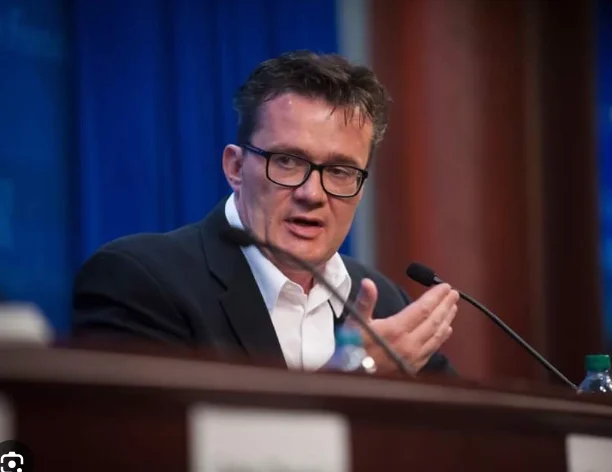
Arjun Jain, Founder & CEO
Fastcode AI, Bengaluru · Stuttgart